
Yin
What has happened
Who the shop is and what it has said so far. MOK reads the record first, without hurry.
Meok research·Prediction model
Our prediction model for human behaviour, designed in house at Meok. Named for ink, and built on the balance of yin and yang.
I·The name

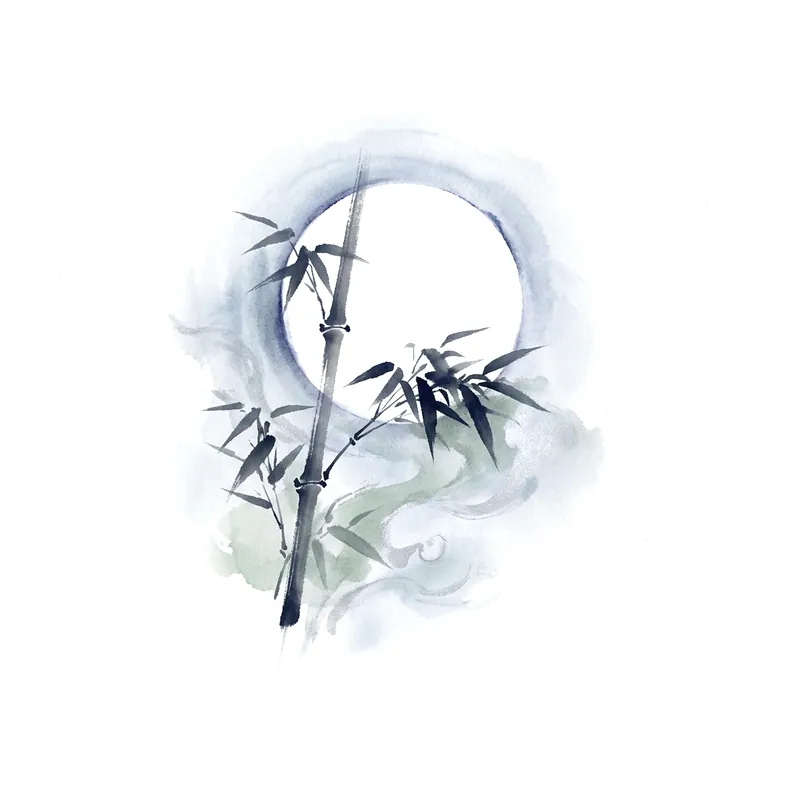
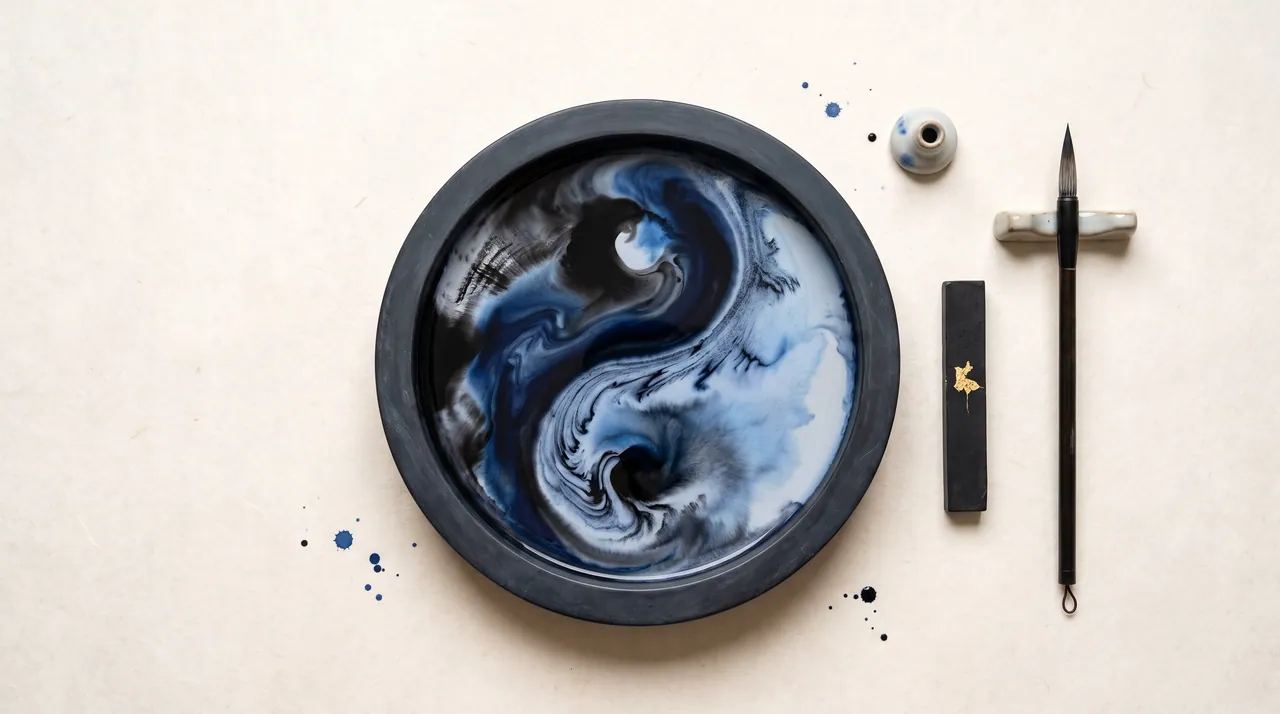
Meok (먹, 墨) is the ink stick you grind with water on an inkstone. Black ink on white paper is the oldest yin and yang there is.
In East Asian thought the world moves between two opposite forces. Yin (陰) is quiet and inward, what has been stored up. Yang (陽) is bright and outward, what is happening now. Neither one wins. The good moment is where they balance.
Prediction is the same craft, so we called the model MOK. Read what has happened, calmly. Watch what is moving now. Then pick the one post where the two meet.
萬物負陰而抱陽,沖氣以為和
All things carry yin and embrace yang; their breath blends into harmony.
Laozi, Dao De Jing, chapter 42


What has happened
Who the shop is and what it has said so far. MOK reads the record first, without hurry.

What is happening
Where attention is flowing right now, what is rising and what is fading. MOK watches the present.
What comes next
The prediction itself. The one idea where both forces line up, chosen before you have to ask.
II·The signals
Most models are built to generate. MOK is built to predict what to make. So every suggestion rests on four signals grounded in observed human behaviour. Two are yin, two are yang.

Who the shop is. The archetype sets the voice, the humour and the angle a story can take.
Fournier 1998 · Ireland & Pennebaker 2010
Read the researchWhat actually happened. Which posts got saved and answered is the floor every prediction stands on. Responses from connected accounts join in when analytics opens.
de Vries et al. 2012 · Lee et al. 2018
Read the researchWhat the world is looking at right now. We search the trade, competing shops, reviews and the neighbourhood as they are today. Timing is part of the idea.
Golder & Macy 2011 · Lazer et al. 2014
Read the researchWhat you swiped right and what you cleared. As approvals and rejections pile up, the standard for a good post grows to fit this shop.
Bradley & Terry 1952 · Dietvorst et al. 2018
Read the research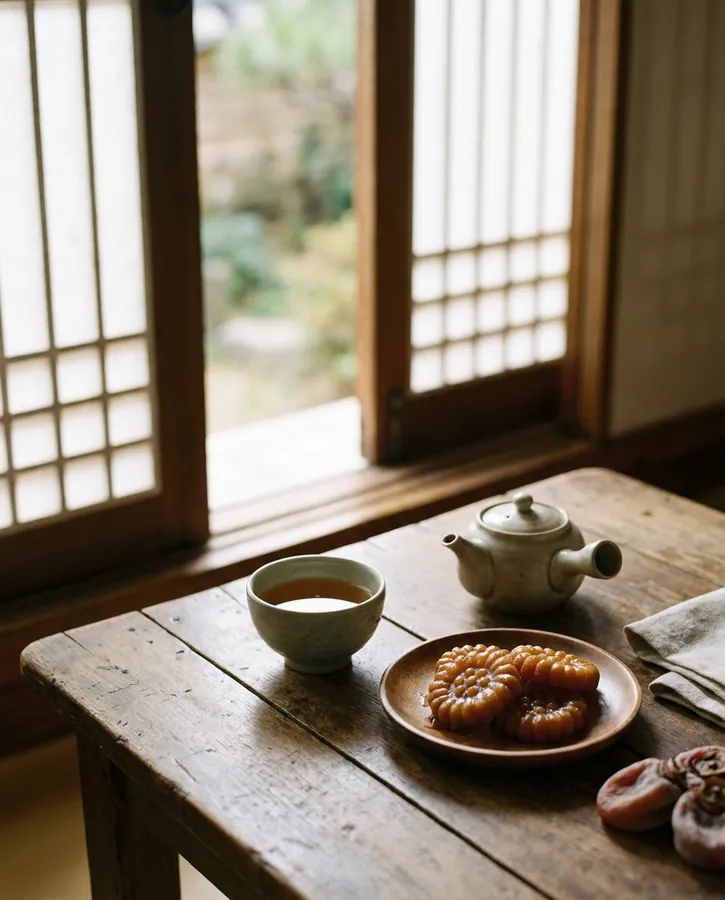
For this shop · illustrative
A new shop with a calm voice. The grain and the moment lead.
III·Method
MOK sits between the world and the models that write and paint. It does not make the post. It decides what the post should be.

Your shop’s link, its archetype, past response, what is rising, and your taste. MOK starts from who you are and where you stand today.
It weighs the four signals against each other and predicts the idea that fits this shop’s day best.
The idea is handed to the models that write and paint as instructions they understand. The tool can change. The idea stays.

IV·The system

A prediction is only useful if you can act on it without thinking. Meok turns the idea MOK picked into a finished post and hands it to you as one card.
You don’t touch settings. You see a finished suggestion and swipe right if you like it, left if you don’t. Writing, painting and choosing the right time are ours. What you swipe, MOK reads again when it picks the next one.
A worked example · not a real prediction
Say the owner gives us one link. The shop’s archetype is the Sage: calm, knowing.
MOK does not pick the usual tea-house post. It looks for where the shop’s grain (yin) meets what is moving now (yang), and today it picked “the hand that warms the cup first.”
What comes back is not a post yet. It is a prediction of the best move this shop can make today. Meok writes from there.
MOK’s call · illustrative
“The hand that warms the cup first.” On cool mornings, a four-slide carousel that shows the hand warming the first cup, because a cold cup lets the aroma escape. Post Thursday at 8:00.
An idea, not a post yet. Meok writes it from here.
V·The shelf
MOK does not pick by feel. What draws people in, when they are open to it, and where prediction has to stop: from nearly seventy years of research, we keep ten papers beside the inkstone, the ones that hold up MOK’s yin and its yang.

Three numbers
One for yin, one for yang, and one for the humility between them.
Yin · what is stored
106,316
Facebook posts studied. Posts with personality, such as humour and emotion, drew more likes, comments and shares than bare prices and deals, and information landed best alongside personality.
Lee, Hosanagar & Nair · 2018 · Management Science
Yang · what is moving
100/108
weeks in which a flu forecast built on search trends alone ran too high. Even three-week-old records read the present better. The moment alone overshoots.
Lazer, Kennedy, King & Vespignani · 2014 · Science
Harmony · in between
14,341
people in an experimental music market. The best songs rarely did poorly and the worst rarely did well, but anything in between was possible. Prediction narrows the path; the last choice stays with a person.
Salganik, Dodds & Watts · 2006 · Science
All three numbers come from other people’s research. MOK’s own report card will be kept here, separately, as it builds up.
Ten papers, by year
1999Harmony · both at once
Faced with two contradicting claims, Chinese participants accepted both in part and looked for a middle way, where Americans took sides. Yin-and-yang thinking, seen in the lab.
Peng & Nisbett (1999). Culture, Dialectics, and Reasoning About Contradiction. American Psychologist, 54(9).
2010Yin · grain
Style matches without our noticing and is hard to fake on purpose. In the letters of Freud and Jung it rose and fell with their relationship. That’s why MOK learns a voice from what the shop actually wrote.
Ireland & Pennebaker (2010). Language Style Matching in Writing: Synchrony in Essays, Correspondence, and Poetry. Journal of Personality and Social Psychology, 99(3).
2011Yang · the moment
Across cultures, moods on Twitter start the day high and sink as it goes on, and at weekends the morning peak comes two hours later. When you post is part of what you say.
Golder & Macy (2011). Diurnal and Seasonal Mood Vary with Work, Sleep, and Daylength Across Diverse Cultures. Science, 333(6051).
2012Yin · response
Across 355 posts from 11 brands, what drew likes was not what drew comments. That’s why past response is never read as a single number.
de Vries, Gensler & Leeflang (2012). Popularity of Brand Posts on Brand Fan Pages: An Investigation of the Effects of Social Media Marketing. Journal of Interactive Marketing, 26(2).
2014Yang · the moment
A flu forecast that trusted search trends alone ran high in most weeks for two years, and three-week-old records read the present better. Yang without yin overflows.
Lazer, Kennedy, King & Vespignani (2014). The Parable of Google Flu: Traps in Big Data Analysis. Science, 343(6176).
2018Yin · response
Personality drew engagement, prices and deals worked best alongside it, and deals drove the click-throughs. What a post is for decides which response to measure.
Lee, Hosanagar & Nair (2018). Advertising Content and Consumer Engagement on Social Media: Evidence from Facebook. Management Science, 64(11).
2018Yang · taste
People are far more willing to use an algorithm when they can adjust it, even slightly, and they do better for it. That’s why Meok lets you swipe, edit and reject.
Dietvorst, Simmons & Massey (2018). Overcoming Algorithm Aversion: People Will Use Imperfect Algorithms If They Can (Even Slightly) Modify Them. Management Science, 64(3).

VI·Why we build it
Good marketing is not pushing hard. It is fitting. The voice should match the shop’s grain, and the moment to post should match what the world is doing. Good owners already know this, but it is hard to judge by hand every day.
MOK reads that judgement for you and Meok turns it into a month of posts. You look after the shop and swipe right on the ones you like.
MOK is designed at Meok and is still learning. This page describes it as it stands on September 30, 2026, and we will rewrite it here when that changes.
A month of posts where yin and yang meet. Free during the beta.